Marrakech: El Badi Palace Entry Ticket with Souvenir Postcard
Open today

Explore at your pace
-
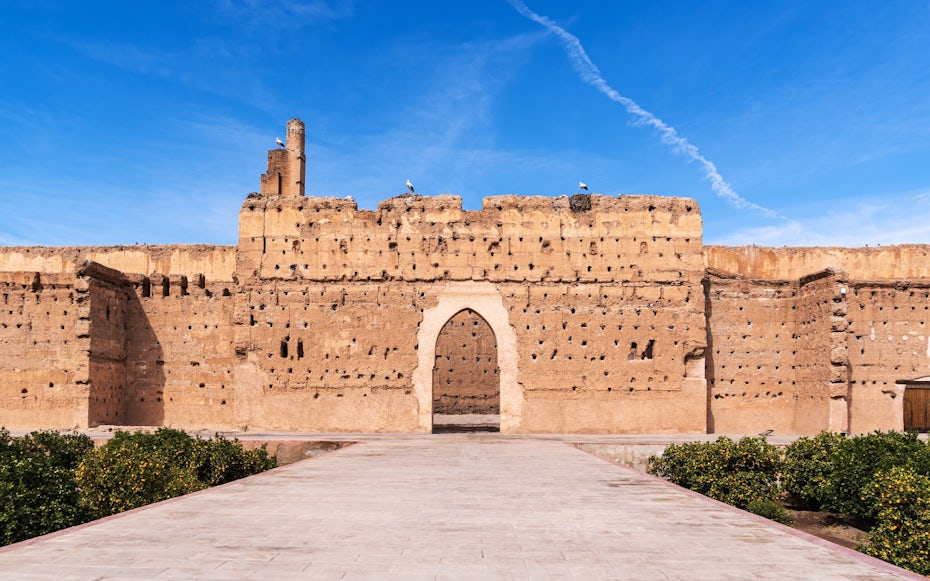
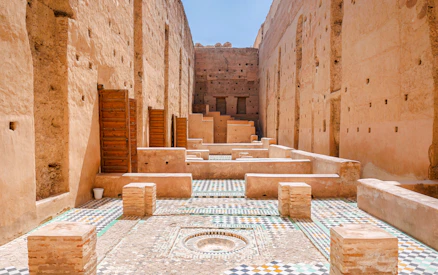
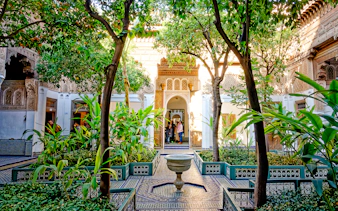
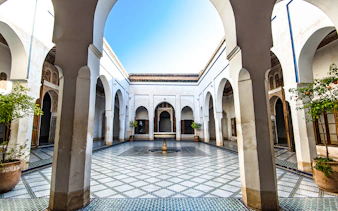
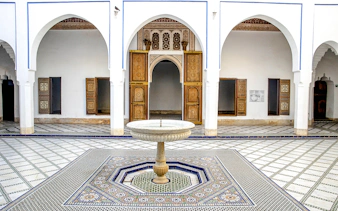
Your ticket to El Badi Palace puts you inside a 16th-century royal complex that guests at its opening reportedly called the Eighth Wonder of the World, now a vast ruin of sunken gardens, towering walls, and nesting storks.
-
The main courtyard runs 135 metres by 110 metres, with four sunken gardens and a central reflecting pool stretching 90 metres, giving you a direct sense of the scale Sultan Ahmad al-Mansur built to intimidate foreign dignitaries.
-
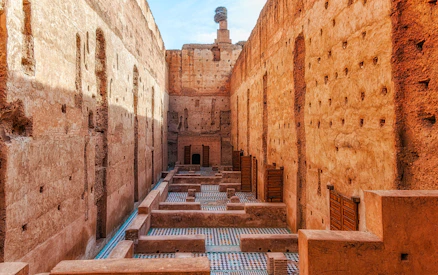
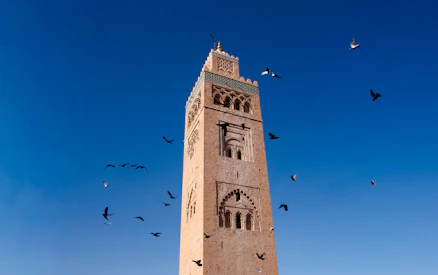
Climb to the terraces for views across the ruins to the Koutoubia Mosque minaret, then head underground into the former storage chambers and passageways that run beneath the complex.
-
The site also houses the 12th-century Koutoubia minbar, a cedarwood pulpit made by artisans in Cordoba in 1137 and considered one of the finest surviving examples of Islamic woodwork.
-
Before you leave, choose a photo from your visit and have it made into a personalized postcard, mailed worldwide from the site, with a digital copy sent to you as well.
-
-
Entry ticket to El Badi Palace
-
Personalized digital postcard souvenir featuring your photo
-
Postcard mailed worldwide
-
-
Guided tour
-
Transfers
-
These tickets can't be cancelled or rescheduled.
Explore El Badi Palace at your own pace with an entry ticket, then leave with a personalized photo postcard mailed anywhere in the world.
Getting started
The entrance to El Badi Palace is off Place des Ferblantiers in the Kasbah district, about a 15-minute walk south of Jemaa el-Fna. Present your booking confirmation at the ticket window to collect your entry. Once inside, you are free to explore in any order, with no fixed route or group to follow.
El Badi Palace
What to expect
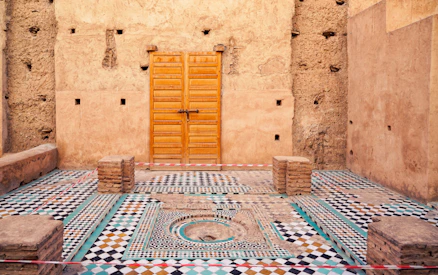
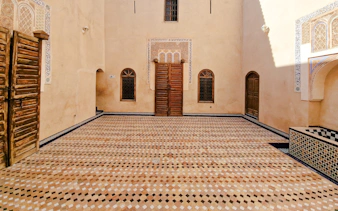
El Badi Palace was built by Sultan Ahmad al-Mansur using ransom money paid by the Portuguese after their defeat at the Battle of the Three Kings in 1578. The marble, gold, and cedar ceilings are long gone, stripped and scattered across Morocco over a century of dismantling. What remains is a large open-air ruin of sunken gardens, towering ochre walls, and underground chambers. Allow 1.5 to 2 hours to cover the terraces, underground areas, and the minbar pavilion properly.
Features
-
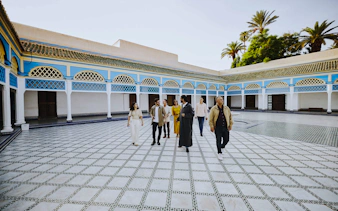
Walk through the main courtyard and sunken gardens, climb the ramparts for panoramic views over the medina, and descend into the underground chambers that once held stores and prisoners.
-
The minbar pavilion houses the 12th-century Koutoubia pulpit, relocated here in 1962 for preservation. It is one of the site's most detailed surviving objects.
-
After your visit, pick a photo from your time at the palace and have it printed as a personalized postcard. Staff mail it to any address worldwide; no local postage needed.
-
You also receive a digital version of the postcard, ready to share or save from your phone.
-
What to bring
-
A wide-brimmed hat and sunglasses: The massive central courtyard is an entirely open-air ruin with zero shade. Standing in the sun while exploring the grounds can become grueling, making sun protection non-negotiable.
-
The palace spans a vast area covered in rough, uneven surfaces, packed dirt, and original 16th-century brickwork. You will also need sturdy footwear to climb the narrow steps to the ramparts safely.
-
A bottle of water: There are no vendors or concession stands selling drinks once you step inside the palace walls, so bringing your own hydration is essential, especially during the warmer months.
-
Cash in Moroccan Dirhams: While online ticketing options exist, entry tickets purchased directly at the gate booth (approximately 70–100 MAD) require cash, as credit card machines are frequently offline or unavailable.
What’s not allowed
-
The underground storage tunnels, historic jail cells, and rampart staircases are incredibly cramped. Large travel bags or rolling suitcases are prohibited inside the complex, and there are no locker facilities or cloakrooms available to store them.
-
Casual smartphone photography and standard handheld cameras are permitted. However, commercial video gear, standalone tripods, and drones are strictly prohibited without pre-approved government filming permits.
-
To preserve the structural integrity of the excavated ruins and protect the delicate, centuries-old Koutoubia Minbar on display, food, vaping, and smoking are banned throughout the interior spaces.
-
If you are booking a combined walking tour through an external vendor, note that medina traffic heavily delays arrivals. Tours depart promptly on time, and missing your slot usually results in a non-refundable cancellation.
Accessibility
-
The main, sprawling central courtyard and the ground-level museum exhibits are flat and physically accessible. However, the underground dungeons, subterranean passages, and panoramic rooftop ramparts are only reachable via steep, narrow, and uneven stone staircases.
-
While strollers can navigate the wide dirt paths of the main courtyard and sunken gardens, they are completely impractical for the narrow, subterranean tunnels and high terraces. Utilizing a baby carrier is highly recommended for exploring the full site.
-
The palace grounds are deceptively large, and seating options or rest benches are virtually non-existent across the courtyard. Expect to remain standing or walking for the entirety of a standard 45-to-75-minute visit.
Additional information
-
Online ticket holders receive a digital voucher that grants fast-track entry past the main ticket window line. However, during peak seasons, all visitors must still clear the standard security checkpoint at the gate.
-
Weather operations: The site operates rain or shine. In the event of heavy rainfall, the open-air mudbrick structures and sunken garden pathways can become slick and muddy, so plan your footwear accordingly.
-
Amenities: Onsite facilities are highly restricted. There are no ATMs, Wi-Fi networks, or cafés located within the palace. Basic public restrooms are available near the entrance, but it is best to carry your own tissues or hand sanitizer.
-
Located in the southern part of the Medina near the Mellah district. Taxis cannot navigate the narrow alleyways leading directly to the gates; you should request drop-off at Place des Ferblantiers, which leaves you with an easy, 5-minute walk to the entrance.
-
Though the palace stands as a ruined skeleton of its former self, it is a protected historical monument housing priceless artifacts like the 12th-century Koutoubia Minbar. Visitors must refrain from climbing on unstable crumbling walls and are expected to dress modestly with shoulders and knees covered.
-
- Your voucher will be emailed to you shortly.
- Display the voucher on your mobile phone with a valid photo ID at the starting point.
- Please check your final voucher for the starting point details & specific instructions.
100% ticket guarantee
Receive tickets on time, for the experience you've booked.
100% experience guarantee
Get a refund if your experience doesn't happen as promised.
100% assistance guarantee
Available before, during, and after your trip.
Similar experiences you'd love




12% off





18% off
Top things to do in Marrakesh

Nearby cities to explore