


Help

Sell on Headout

Azores Whale Watching

Visit the Azores Islands to marvel at majestic whales and dolphins who are year-round residents of the water. Feel closer to the ocean and nature after your visit.
Loved by over 53 million guests worldwide
Slide 1 of 8
3 hrs
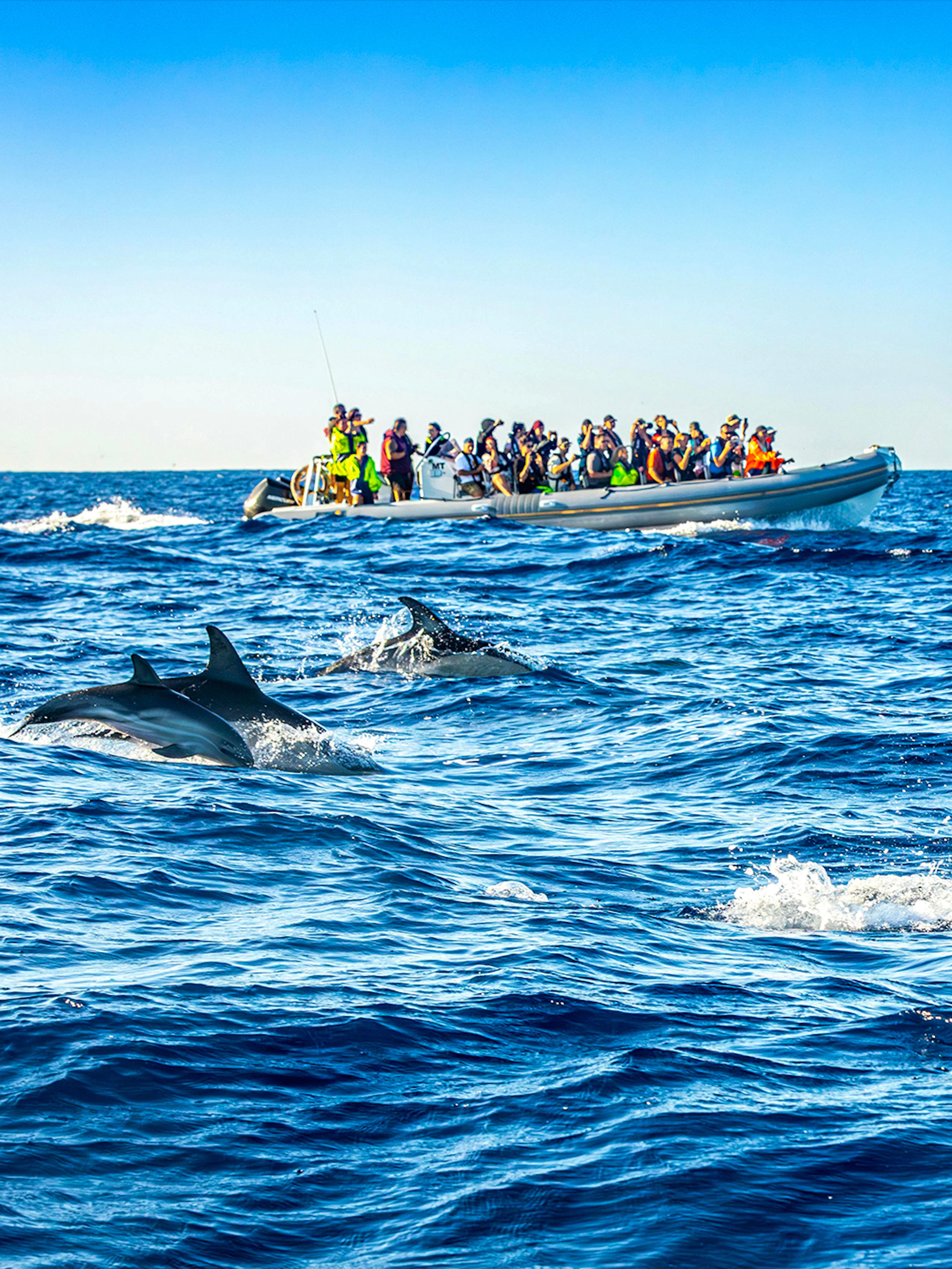
  • High-speed Zodiac RIBs carry 12 to 28 guests, with a marine biologist guiding each encounter so you get front-row insight into Azorean wildlife.

  • A marine biologist or wildlife guide accompanies you offshore, with Zodiac RIB ride, waterproof suit, life vest, all fees, and insurance.

  • Out on the Atlantic, crew and land lookouts help locate pods, with up to 28 whale and dolphin species recorded by this operator across the seasons.

  • On-water team follows Azores whale watching guidelines, limiting approach distances and viewing time so cetaceans are observed without disturbance.

More details
  • High-speed Zodiac RIBs carry 12 to 28 guests, with a marine biologist guiding each encounter so you get front-row insight into Azorean wildlife.

  • A marine biologist or wildlife guide accompanies you offshore, with Zodiac RIB ride, waterproof suit, life vest, all fees, and insurance.

  • Out on the Atlantic, crew and land lookouts help locate pods, with up to 28 whale and dolphin species recorded by this operator across the seasons.

  • On-water team follows Azores whale watching guidelines, limiting approach distances and viewing time so cetaceans are observed without disturbance.

from
€65
Slide 1 of 12
3 hrs
Pickup available
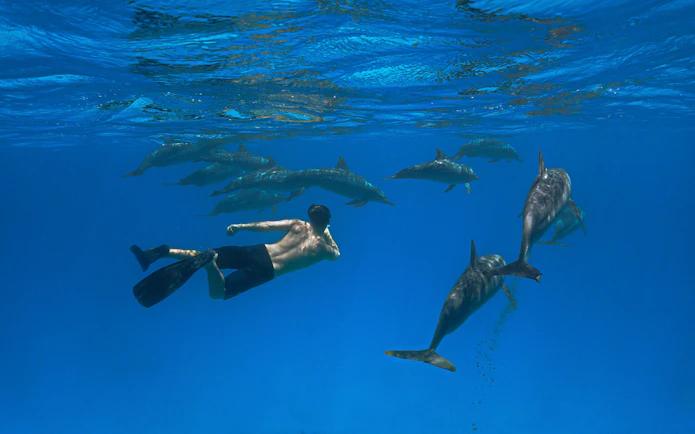
  • Small group sizes create more opportunities to enter the water when conditions allow, while biologists explain dolphin behavior throughout.

  • Neoprene gear, Zodiac transport, onboard guidance, and wildlife interpretation are included, so no specialist equipment is needed.

  • After locating dolphins with help from land-based spotters, swimmers enter the water in pairs while guides supervise interactions.

  • A second stop explores São Miguel's marine environment through snorkeling above coastal habitats near Vila Franca do Campo.

  • Comfort in open water is recommended, and all wildlife encounters follow strict conservation rules designed to minimize disturbance.

More details
  • Small group sizes create more opportunities to enter the water when conditions allow, while biologists explain dolphin behavior throughout.

  • Neoprene gear, Zodiac transport, onboard guidance, and wildlife interpretation are included, so no specialist equipment is needed.

  • After locating dolphins with help from land-based spotters, swimmers enter the water in pairs while guides supervise interactions.

  • A second stop explores São Miguel's marine environment through snorkeling above coastal habitats near Vila Franca do Campo.

  • Comfort in open water is recommended, and all wildlife encounters follow strict conservation rules designed to minimize disturbance.

from
€116
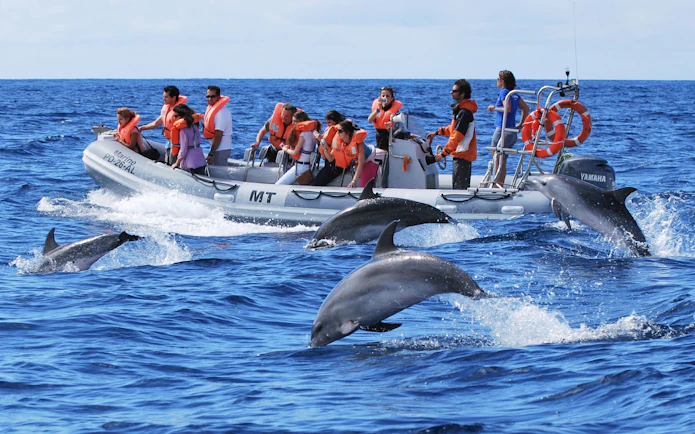
Slide 1 of 7, Tourists on a boat watching for whales and dolphins off the coast of Sao Miguel, Azores.
Tourists on a boat watching for whales and dolphins off the coast of Sao Miguel, Azores.
3 hrs
  • Cruise into the Atlantic with experienced skippers and marine wildlife guides searching for whales and dolphins around São Miguel.

  • Land-based lookouts coordinate with your boat to help locate marine mammals before your skipper carefully approaches observation areas.

  • Learn about whale and dolphin behavior, migration, and conservation through live commentary during each wildlife encounter.

  • Take in São Miguel's volcanic coastline and open-ocean scenery while cruising between wildlife observation points.

More details
  • Cruise into the Atlantic with experienced skippers and marine wildlife guides searching for whales and dolphins around São Miguel.

  • Land-based lookouts coordinate with your boat to help locate marine mammals before your skipper carefully approaches observation areas.

  • Learn about whale and dolphin behavior, migration, and conservation through live commentary during each wildlife encounter.

  • Take in São Miguel's volcanic coastline and open-ocean scenery while cruising between wildlife observation points.

from
€70
Slide 1 of 6
2 hrs 30 mins - 3 hrs
  • Set out from Lajes do Pico on a Zodiac boat built for open-water wildlife watching, led by marine biologist guides and skippers.

  • Marine biologists explain whale and dolphin behavior while land-based lookouts help direct the boat toward active wildlife areas.

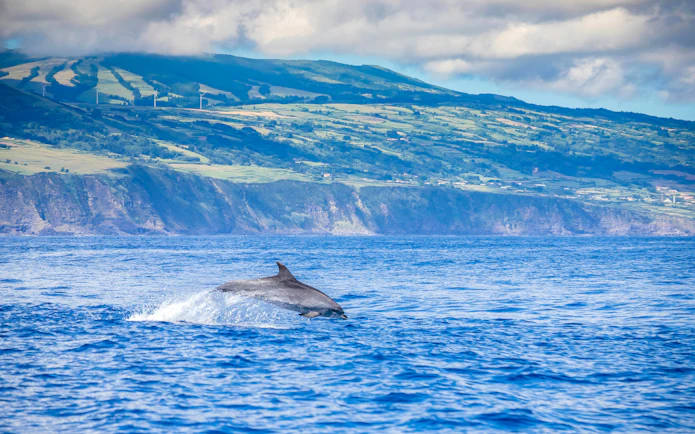
  • Look for more than 25 cetacean species found around the Azores, with chances to spot whales, dolphins, birds, and turtles.

  • Pico’s shoreline stays in view as you move between wildlife areas, adding coastal scenery to the marine observation experience.

  • If no cetaceans are spotted on your tour, a 100% money-back guarantee as per the sighting policy.

More details
  • Set out from Lajes do Pico on a Zodiac boat built for open-water wildlife watching, led by marine biologist guides and skippers.

  • Marine biologists explain whale and dolphin behavior while land-based lookouts help direct the boat toward active wildlife areas.

  • Look for more than 25 cetacean species found around the Azores, with chances to spot whales, dolphins, birds, and turtles.

  • Pico’s shoreline stays in view as you move between wildlife areas, adding coastal scenery to the marine observation experience.

  • If no cetaceans are spotted on your tour, a 100% money-back guarantee as per the sighting policy.

from
€66
Slide 1 of 7, Whale breaching near Terceira Island during a whale watching tour.
Whale breaching near Terceira Island during a whale watching tour.
3 hrs
  • Set out from Angra do Heroísmo on this half-day Atlantic cruise guided by skippers, biologists, and coastal lookouts tracking activity.

  • Before boarding, your crew briefs you on cetaceans, sighting methods, safety rules, and Azores wildlife viewing codes for responsible spotting.

  • Search Terceira’s surrounding waters for whales and dolphins, with up to 27 cetacean species recorded by the operator in the Azores.

  • Between sightings, take in Terceira’s coastline, volcanic geological formations, and open Atlantic views from the boat as you cruise.

More details
  • Set out from Angra do Heroísmo on this half-day Atlantic cruise guided by skippers, biologists, and coastal lookouts tracking activity.

  • Before boarding, your crew briefs you on cetaceans, sighting methods, safety rules, and Azores wildlife viewing codes for responsible spotting.

  • Search Terceira’s surrounding waters for whales and dolphins, with up to 27 cetacean species recorded by the operator in the Azores.

  • Between sightings, take in Terceira’s coastline, volcanic geological formations, and open Atlantic views from the boat as you cruise.

from
€65
Slide 1 of 6
2 hrs
  • Swim with wild dolphins in their natural Atlantic habitat on an intimate experience limited to just 8 participants.

  • Experienced instructors supervise every stage, from the initial briefing to water entry, ensuring responsible wildlife interactions.

  • Enter the water only when sea conditions and dolphin behavior make it appropriate, creating a respectful encounter for both guests and wildlife.

  • Enjoy coastal views around Terceira while traveling by boat to and from the dolphin observation area.

More details
  • Swim with wild dolphins in their natural Atlantic habitat on an intimate experience limited to just 8 participants.

  • Experienced instructors supervise every stage, from the initial briefing to water entry, ensuring responsible wildlife interactions.

  • Enter the water only when sea conditions and dolphin behavior make it appropriate, creating a respectful encounter for both guests and wildlife.

  • Enjoy coastal views around Terceira while traveling by boat to and from the dolphin observation area.

from
€110

Whale watching in the Azores at a glance

  • Season: March to October; spring best for blue/fin whales, summer for calmer seas
  • Duration: 3–3.5 hours standard; extended combo and offshore trips up to 6 hours
  • What you'll see: Sperm whales, several dolphin species; blue and fin whales mainly in spring
  • Vessel options: Rigid-inflatable RIBs, mid-size catamarans, larger multi-deck whale-watching boats
  • Thermal gear: Lifejackets always; waterproof suits provided on most RIB and combo tours
  • Guide: Marine biologists or experienced naturalists provide live commentary throughout the trip
  • Departure point: Mainly Ponta Delgada and Vila Franca do Campo; also Pico and Terceira harbours
  • Best for: Wildlife-focused travelers, families, photographers, and adventure seekers comfortable with open-ocean conditions

Which Azores whale watching cruise is right for you?

Your main choice is between a stable catamaran, a faster small-group Zodiac (RIB), and a longer whale watching + islet combo that adds snorkeling and coastal time.

Whale Watching Half-day – Catamaran

A classic 3‑hour Azores whale watching tour on a larger, more stable vessel. Choose this if you want rail space to move around, indoor shelter, and toilets, and you’re happy viewing whales and dolphins from a slightly higher deck. It’s the most forgiving option for first-timers, families, older travelers, or anyone worried about seasickness or rough Atlantic swell.

  • Departure point: Ponta Delgada or similar island marina; check specific harbor
  • Vessel: Large catamaran with indoor cabin, outdoor decks, and onboard toilets
  • Duration: Around 3 hours on water plus check-in time
  • Group size / privacy: Medium–large shared group; dozens of guests per departure
  • Guide format: Naturalist or marine biologist commentary over PA and on deck
  • Pace / comfort: Relaxed and relatively smooth; sheltered seating available throughout
  • Includes: Lifejacket; safety briefing; basic interpretation about whales and dolphins

Whale Watching Half-day – Zodiac Boat

A faster, small-group whale and dolphin search on a rigid inflatable boat (RIB). You sit low and exposed at sea level, trading comfort for speed and proximity. This is the better choice if you’re physically fit, want an energetic ride, and care more about quick repositioning and eye-level views than about having toilets or indoor space on board.

  • Departure point: Ponta Delgada or similar island marina; confirm exact meeting office
  • Vessel: Open rigid inflatable boat (Zodiac/RIB), no cabin or toilets
  • Duration: About 2.5–3 hours at sea, plus brief shore preparations
  • Group size / privacy: Small shared group; roughly a dozen passengers per vessel
  • Guide format: Marine biologist or naturalist guide plus skipper, with close interaction
  • Pace / comfort: Fast, exposed, and bouncy; expect spray and physical effort
  • Includes: Lifejacket, waterproof suit where provided, detailed wildlife explanations

Azores Whale Watching & Islet Boat Tour

A combined experience that starts like a standard whale and dolphin search, then continues to a volcanic islet area for coastal views and a snorkeling or swimming segment. Choose this if you have a full half-day, want more variety than just watching from the vessel, and don’t mind extra time on the water and in the elements.

  • Departure point: Vila Franca do Campo marina on São Miguel Island
  • Vessel: Motor vessel or Zodiac configured for both offshore and coastal segments
  • Duration: Approximately 4–6 hours including whale watching and islet time
  • Group size / privacy: Small–medium shared group depending on vessel configuration
  • Guide format: Marine biologist guide covering whales, dolphins, geology, and islet ecology
  • Pace / comfort: Moderate, active day; mix of boat time and in-water activity
  • Includes: Lifejacket, usually snorkeling gear, safety briefing, natural reserve guidance

Pico Island: Whale Watching Boat Tour

A whale watching cruise from Pico, one of the Azores’ classic whaling-era islands. You head quickly into deep offshore waters using land-based spotters, often focusing on sperm whales and multiple dolphin species. Pick this if you’re already visiting Pico or want sightings combined with strong “whaling to conservation” context and smaller-harbor atmosphere.

  • Departure point: Pico Island harbor such as Lajes do Pico or Madalena
  • Vessel: Motor vessel suited to offshore Atlantic conditions; open viewing areas
  • Duration: Roughly 3 hours offshore, plus check-in and safety briefing
  • Group size / privacy: Small–medium shared groups; fewer passengers than big catamarans
  • Guide format: Local naturalist or biologist; often includes whaling history commentary
  • Pace / comfort: Moderate; open-air viewing with limited shelter depending on vessel
  • Includes: Lifejacket; safety briefing; explanations of sperm whales and local wildlife

Whale sightings & season in the Azores

Best time to go: The core Azores season runs from March to October. Late March to May is peak for species variety, when migrating blue and fin whales pass through while feeding on spring blooms. June to early September brings calmer seas and reliable resident sperm whales and dolphins, ideal for comfortable trips. Early March and late October are shoulder months: tours run, but weather is more changeable and sightings less predictable.

What you're likely to see: Sperm whales are the headline species and are common in late spring and summer (reliable resident). Common, bottlenose, and Atlantic spotted dolphins are very frequent across the main season (reliable, often multiple pods). Blue and fin whales are occasional spring visitors (March–May only, rare treats). Pilot whales, beaked whales, turtles, and Cory’s shearwaters are occasional extras. Sightings are never guaranteed, but operators are good at finding them in season. Most major operators offer a free re-ride or easy rebooking if no cetaceans are seen.

Responsible whale watching: A must-do

Whale watching in the Azores runs under Portuguese cetacean-protection regulations, and the tours here follow those standard operational rules.

  • Low-impact vessels: Licensed operators use modern motor catamarans and rigid inflatable boats, minimizing noise and fuel use in whale areas.
  • Regulated approach distance: Skippers respect national rules, typically keeping at least ~50 meters from whales and slowing on approach.
  • No pursuit policy: If whales dive or move away, boats hold position or slowly disengage rather than follow.
  • Controlled congregation: Radio coordination ensures only a limited number of boats are near the same whale or dolphin group at once.

Azorean whale watching has evolved from whaling to regulated observation over several decades of practice.

What a whale watching day looks like in the Azores

Check-in and gear up

Arrive at the marina office, check in, and meet your crew. Guides issue lifejackets and often waterproof suits, explain safety basics, and walk the group to either a larger catamaran or an open RIB before casting off.

What to expect from the conditions

  • Climate/cold: Even in summer, 20–25°C on land can feel closer to 10–15°C with wind and spray at sea, so dress in warm layers.
  • Sea conditions: The Atlantic can be choppy and bouncy, especially on RIBs; consider a larger catamaran and motion-sickness tablets if you’re sensitive.
  • Daylight/visibility: Tours run only in daylight and can be affected by fog, wind, or low cloud; mornings usually offer calmer, clearer conditions.
  • Sightings reality: Whales and dolphins are wild and never guaranteed; set expectations for brief or distant views rather than constant close-ups.

A larger, more sheltered boat is usually the better fit if comfort is a priority.

What to expect from the conditions

Climate and cold

Even in summer, it can feel 5–10°C colder at sea with wind and spray; dress in warm, layered, waterproof clothing.

Your whale watching tour boarding points in the Azores

Ponta Delgada Marina (São Miguel)

A central waterfront marina on Avenida Infante Dom Henrique, opposite Portas da Cidade archways and main seafront hotels. Avenida Infante Dom Henrique, 9500-769 Ponta Delgada, São Miguel, Azores, Portugal – View on Google Maps

Getting there

  • On foot: 5–15 minutes’ walk from most central Ponta Delgada hotels and Portas da Cidade.
  • By taxi: 10–15 minutes from Ponta Delgada Airport; ask for “Marina de Ponta Delgada.”
  • By bus: Local city buses run along the seafront; alight near the marina and walk a few minutes.
  • By car: Follow signs to Ponta Delgada waterfront; public parking lots surround the marina area.

  • Arrival: Be there 30 minutes early for check-in, safety briefing, and waterproof gear fitting.
  • Famous for: Main Azores whale-watching hub, lined with cafés and views of cruise ships and yachts.

Vila Franca do Campo Marina (São Miguel)

Small harbor on São Miguel’s south coast, below Vila Franca’s old town and opposite the islet Ilhéu de Vila Franca do Campo. Marina de Vila Franca do Campo, 9680-909 Vila Franca do Campo, São Miguel, Azores, Portugal – View on Google Maps

Getting there

  • By car: Around 25–30 minutes’ drive southeast from Ponta Delgada via the main coastal road.
  • By bus: Regional buses link Ponta Delgada and Vila Franca; walk downhill from town to the marina.
  • On foot: 5–10 minutes’ walk from central Vila Franca do Campo down toward the waterfront.
  • By taxi: Taxis from Ponta Delgada or resort areas can drop you at the marina entrance.

  • Arrival: Arrive 30 minutes before departure for check-in, briefing, and suit or lifejacket fitting.
  • Famous for: Launch point for Ilhéu de Vila Franca do Campo nature reserve and sheltered islet lagoon.

Lajes do Pico Harbour (Pico Island)

Traditional whaling port on Pico’s south coast, with whale-watching offices near the seafront church and old slipways. Porto de Lajes do Pico, 9930-126 Lajes do Pico, Pico, Azores, Portugal – View on Google Maps

Getting there

  • By car: About 35–40 minutes’ drive from Pico Airport via the island’s main coastal road.
  • By bus: Limited regional services connect nearby towns; check current timetables locally before travel.
  • On foot: 5–10 minutes from central Lajes do Pico accommodations down toward the harborfront.
  • By taxi: Pre-booked taxis from Madalena, São Roque, or airport can drop at harbor entrance.

  • Arrival: Plan to arrive 30 minutes early for check-in, safety talk, and gear distribution.
  • Famous for: Historic Azorean whaling town with the Museu dos Baleeiros whaling museum overlooking the harbor.

Horta Marina (Faial Island)

Colorful Atlantic yachting hub on Faial’s south coast, beside the town center and the painted sailor murals along the quays. Marina da Horta, Avenida 25 de Abril, 9900-141 Horta, Faial, Azores, Portugal – View on Google Maps

Getting there

  • On foot: 5–10 minutes’ walk from central Horta and waterfront hotels along Avenida 25 de Abril.
  • By taxi: Around 15–20 minutes from Horta Airport directly to the marina promenade.
  • By ferry: Inter-island ferries from Pico arrive at Horta harbor; whale tours depart nearby.
  • By car: Follow signs to Horta center and marina; several public parking areas line the waterfront.

  • Arrival: Get there 30 minutes before sailing for check-in, safety briefing, and equipment fitting.
  • Famous for: Transatlantic yacht stop with famous marina wall paintings and views across the channel to Pico.

Confirm your exact meeting point, office, and pier/boarding zone on your booking confirmation, as multiple operators share these harbors.

Plan your visit

  • Operating season: Tours run year-round, with fewer departures and more weather cancellations from November to March.
  • Daily departures: Typically morning (around 8:00–9:30) and early afternoon; extra summer slots depend on operator.
  • Cruise duration: Standard whale-watching legs last ~2.5–3 hours at sea; combos and offshore trips can reach 4–7 hours.
  • Door-to-door time: Allow 3.5–4 hours including check-in, briefings, and boarding; full-day expeditions take most of the day.
  • Seasonal conditions: Spring brings more species but choppier seas; summer generally offers calmer water and warmer air.

Tips for the best whale watching trip in the Azores

  • Pick your boat with your body in mind, not your ego: If you bruise easily or get queasy, book the catamaran; Zodiacs shine for fit, thrill-seeking adults.

  • Aim for a morning departure if you can: Azores crews quietly prefer early slots because seas are usually flatter and spotting distant blows is easier.

  • Schedule whale watching early in your Azores stay: Weather can cancel trips at short notice; going on day one or two gives you buffer to rebook.

  • If you’re seasick‑prone, claim a midship or stern spot on big boats: These areas move less than the bow and make it easier to keep eyes on the horizon.

  • On Zodiacs, keep one hand for the boat, one for your gear: You’ll be straddling seats at speed—stow loose items in the dry bags the crew points out.

  • When the guide calls “blow at two o’clock,” rotate calmly, don’t rush the rail: On full catamarans, stepping aside after your glance keeps everyone’s view fair.

  • Listen for the vigia updates during lulls: When your biologist mentions a new radio call from the cliff spotters, that’s the moment to have your camera ready.

  • For photos, think short zoom and burst mode, not giant lenses: Atlantic swell and boat vibration make a 70–200mm (or phone zoom) far more usable than heavy telephotos.

  • On Pico, pair your sea trip with the whaling museum the same day: Doing the Lajes do Pico tour then the museum turns sightings into a coherent “from whaling to watching” story.

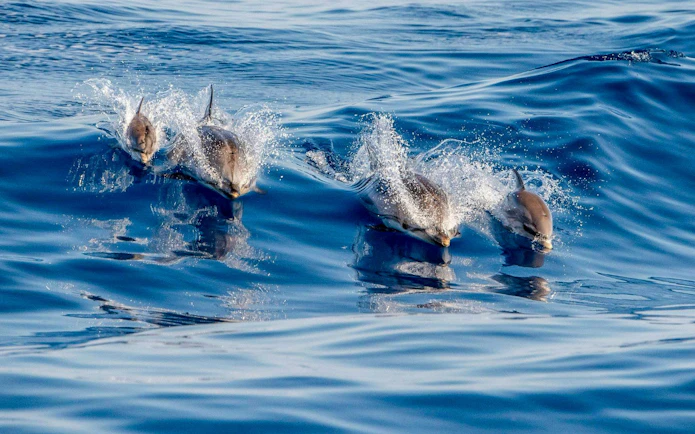
  • Treat dolphins as part of the headline act, not a consolation prize: In summer especially, bow‑riding pods will give you the closest, most playful encounters of the whole outing.

Frequently asked questions about whale watching tours in the Azores

  • Standard tours last about 2.5–3 hours on the water. With check‑in, safety briefing, and boarding, you should plan roughly 3.5–4 hours door to door. Some trips may run longer if crews are still searching for animals, so avoid tight plans immediately afterward.

We've served 53 million+ guests and we are here for you

53 million+

Happy customers across 10,000+ experiences

In the media

Featured and recommended by the best brands

24 x 7 help center

Have a question? Live chat with local experts anywhere, anytime