Help

Sell on Headout

Experience the best of World Heritage Kinderdijk-Elshout

Step into a scene straight out of a painting at Kinderdijk, a UNESCO World Heritage site. This landscape is home to a collection of 19 windmills and is a living monument to the Netherlands' centuries-long battle against water, showcasing an ingenious system of water management that shaped the nation.
Loved by over 57 million guests worldwide
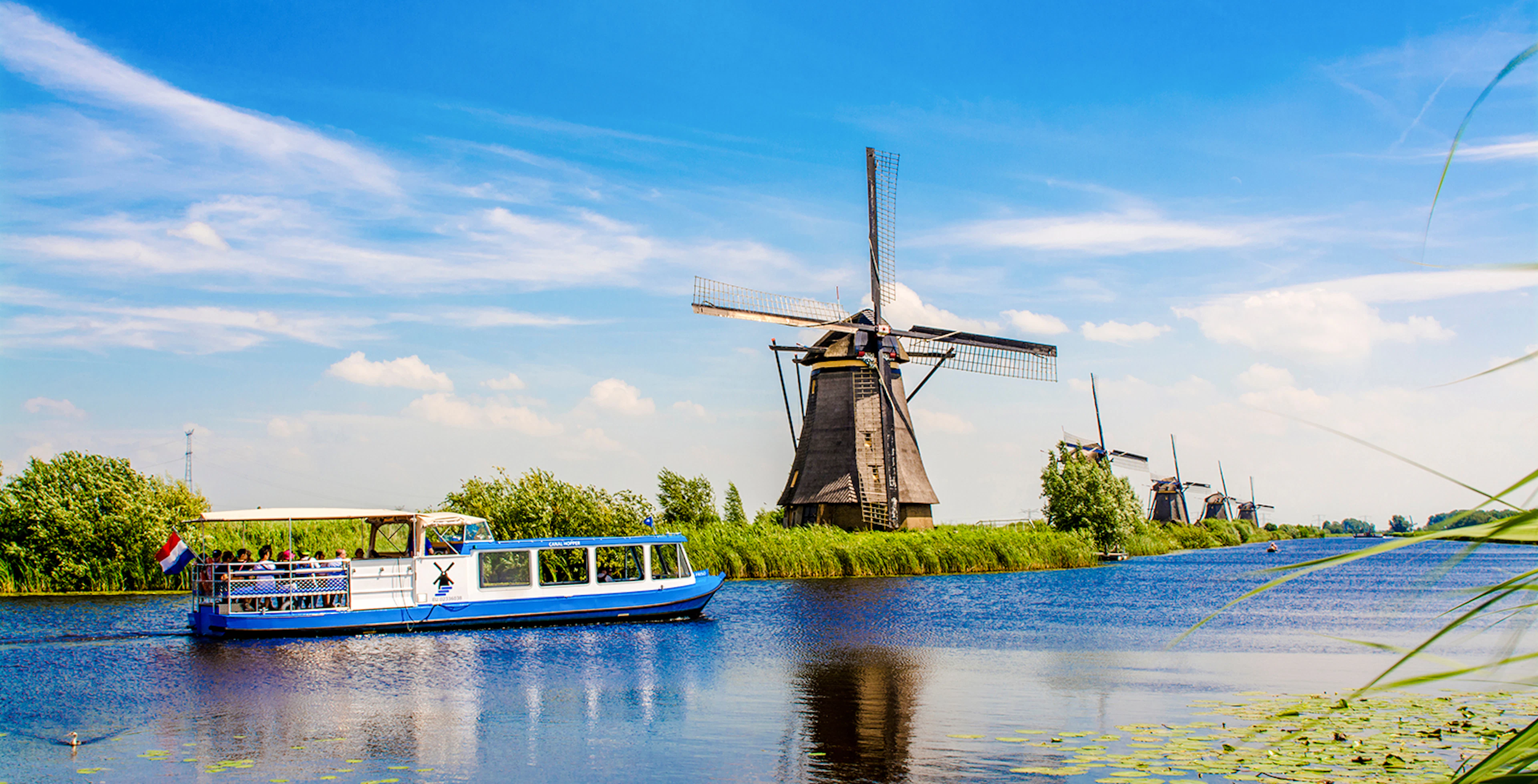
Slide 1 of 13, Tourist boat on Kinderdijk canal with historic windmills in the background.
Tourist boat on Kinderdijk canal with historic windmills in the background.
Flexible
Audio guide
  • Step inside two authentic working windmills and get a look at how Dutch millers lived and worked.

  • Get access to the Kinderdijk UNESCO World Heritage Site, including historic museum windmills, scenic boat tours, and pumping stations.

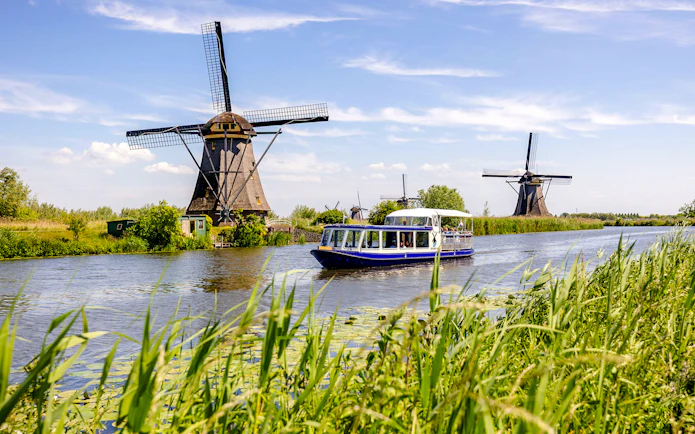
  • Take a boat tour past the 19 windmills and experience the countryside landscape and windmills from the water

  • At the Wisboom pumping station, enter the 19th-century engine room and discover how steam and later electricity were used to manage water levels.

  • Head to auxiliary pumping station De Fabriek for a deep dive into the story of Kinderdijk through an informative film and interactive exhibits about the water management system.

More details
  • Step inside two authentic working windmills and get a look at how Dutch millers lived and worked.

  • Get access to the Kinderdijk UNESCO World Heritage Site, including historic museum windmills, scenic boat tours, and pumping stations.

  • Take a boat tour past the 19 windmills and experience the countryside landscape and windmills from the water

  • At the Wisboom pumping station, enter the 19th-century engine room and discover how steam and later electricity were used to manage water levels.

  • Head to auxiliary pumping station De Fabriek for a deep dive into the story of Kinderdijk through an informative film and interactive exhibits about the water management system.

from
€21

Pro tips to help you make a pick

If you only want exterior views, use the free dike paths and skip the paid add-ons. Buy an entry ticket only if you want the two museum windmills, boat tours, Wisboomgemaal engine room, and the De Fabriek film and exhibition.

Transport is not included with the standard entry ticket. From Rotterdam, compare a self-guided waterbus trip with organized day tours that bundle round-trip transfers, a guide, and some on-site access.

The entry ticket includes the audio tour in the Kinderdijk app. If you go DIY by waterbus or bus, download it in advance, because your transport ticket usually covers only the ride, not the site interpretation.

Book ahead for weekends and high season if you want museum mills and canal boats. Visitors report the busiest waits at the visitor centre, windmill entrances, and small-boat boarding points.

Plan about 2 to 4 hours onsite. From Rotterdam, add about 40 to 60 minutes each way by waterbus or about 30 to 45 minutes by car or coach when comparing tour options.

Check the latest waterbus timetable before committing to a DIY visit. Routes and whether you need a transfer at Ridderkerk can change by season, and missing the last return boat may mean rerouting by bus or taxi.

If mobility is limited, choose a coach-based tour or focus on the visitor centre, one short dike section, and a boat ride. The visitor centre is more accessible than the museum mills, which have steep, narrow stairs.

If you drive, factor in the documented parking fee of €9.50 at Marineweg in Alblasserdam. The Headout assortment also notes a shuttle bus running daily between 9:00 and 18:00 to and from the entrance of the windmill area.

About Kinderdijk - Rotterdam

Kinderdijk is an original polder landscape rather than a recreated museum village, so the visit feels like a walk through Dutch water engineering in place. The 19 windmills stand beside canals and dikes, many are still inhabited, and the experience combines free public paths with ticketed museum mills, boat rides, and pumping-station exhibits.

Did you know?

The main landscape paths at Kinderdijk are free to walk. Tickets are mainly checked at the visitor centre, museum windmills, and boat boarding points.

Many of the windmills are still inhabited by private miller families, which is why only a subset can be entered as museum mills.

Kinderdijk became a UNESCO World Heritage Site in 1997 for illustrating the evolution of Dutch water-management technology over almost a millennium.

The name “Kinderdijk,” meaning “Children’s dike,” is linked to a flood legend about a cradle carrying a baby and a cat to safety.

Modern pumping stations now do most of the drainage work. The historic windmills are preserved and may still run for demonstrations and as backup.

Why visit Kinderdijk - Rotterdam?

19 Windmills in Their Original Polder Setting

World Heritage Kinderdijk-Elshout preserves 19 windmills along canals and dikes in the Alblasserwaard polder. UNESCO recognized the site in 1997 for showing the evolution of Dutch water-management technology, so you are seeing the landscape in the setting it was built to protect.

Inside Blokweer and Nederwaard Museum Mills

The two museum windmills let you move beyond exterior photos and see how miller families once lived and worked. Inside, you’ll find compact living quarters, original mechanical spaces, and steep, narrow stairs that show how demanding daily life in a working mill could be.

Boat Tours Between the Windmill Rows

Boat rides through the village and along the mills give you eye-level views across the canals without covering the whole route on foot. They are especially useful if you want different photo angles or a shorter walking day, though small boats can fill quickly in busy periods.

Wisboomgemaal and De Fabriek Explain Water Control

The Wisboomgemaal engine room and the exhibition at De Fabriek connect the windmills to the bigger Dutch drainage system. A multi-screen film and displays explain how historic mills, pumping stations, and polders worked together, and why modern pumps now handle most of the drainage.

Easy Half-Day Trip from Rotterdam

Kinderdijk works well as a half-day outing, with most visitors spending about 2 to 4 hours onsite. From Rotterdam, the waterbus from Erasmusbrug to Kinderdijk Molenkade takes about 40 to 60 minutes, while organized tours simplify the trip by bundling transport and on-site access.

Plan your visit

Visitor Centre / Main Access from Parking

Located beside the main parking area and central facilities near Nederwaard 1, this is the most straightforward access point for visitors arriving by car, coach, or regional bus. It places you closest to the information desk, exhibits, toilets, shop, and the main ticket-validation point for the visitor centre. In high season, this area is the most likely to have lines for ticket purchase or scanning. Approaches to the visitor centre are step-free, and the building is generally more accessible than the historic mills. Museum mill interiors usually involve steep, narrow stairs and are not suitable for most wheelchair users.

Waterbus Landing (Molenkade)

This river landing stage is the main arrival point for visitors coming from Rotterdam or Dordrecht by Waterbus. It sits about 0.2 to 0.4 km from the main Kinderdijk area, with a walk of roughly 3 to 5 minutes along the signed dike path toward the mills and visitor centre. There is usually no formal entrance queue here because passengers step straight onto the open landscape paths. The route onward is relatively level, but gangway slopes can be steep at low water, and the wider site still includes some bridges and uneven surfaces. Use this access point if you want the most scenic arrival.

Village-side Paths

These walking and cycling access paths connect Kinderdijk village streets to the dike and main landscape routes. They are best for local walkers, cyclists, and visitors staying nearby who do not need to start at the parking area or waterbus stop. There is no entrance queue, since these are open public paths, and tickets are checked later only at museum mills, the visitor centre, and boat boarding points. Some stretches can be narrower than the main approach routes, so they may feel tighter in busy periods. Bike parking is available near the visitor centre if you plan to continue on foot.

Browse by themes

Nearby cities to explore

Get the Headout app, save up to 80%

Enjoy exclusive deals, offline access to your tickets & live booking updates.

Trusted by over 57 million guests worldwide

100% booking protection

You are fully protected end-to-end. If anything is off, we'll fix it or refund you.

Know more

Book with flexibility

Book stress-free with free cancellation and pay-later options on most experiences.

24/7 trip support

We're always a tap away - before, during and after your trip, in all languages.

Verified reviews from real travellers. Trusted by guests worldwide.