
Help

Sell on Headout

Experience the best Yakatabune Cruises in Tokyo

Experience Tokyo from the water aboard a traditional Yakatabune cruise. These classic houseboat journeys blend scenic views with cultural performances, offering a unique way to see the city skyline. Enjoy live entertainment, refreshments, and warm hospitality as you sail through Tokyo Bay.
Loved by over 57 million guests worldwide
Slide 1 of 9, Woman in kimono performing tea ceremony on Tokyo Bay Yakatabune cruise with Mount Fuji backdrop.
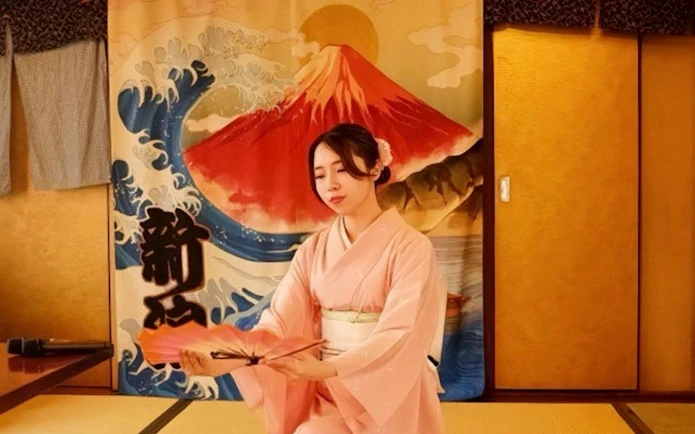
Woman in kimono performing tea ceremony on Tokyo Bay Yakatabune cruise with Mount Fuji backdrop.
1 hr 30 mins
  • Experience tradition and culture aboard a sakura themed Yakatabune
  • Admire Tokyo's iconic skyline and waterfront views along the route
  • Experience tea ceremony with guidance on it's history and cultural meaning
  • Relax with Japanese sweets & unlimited soft drinks on cruise
More details
  • Experience tradition and culture aboard a sakura themed Yakatabune
  • Admire Tokyo's iconic skyline and waterfront views along the route
  • Experience tea ceremony with guidance on it's history and cultural meaning
  • Relax with Japanese sweets & unlimited soft drinks on cruise
from
¥11,800
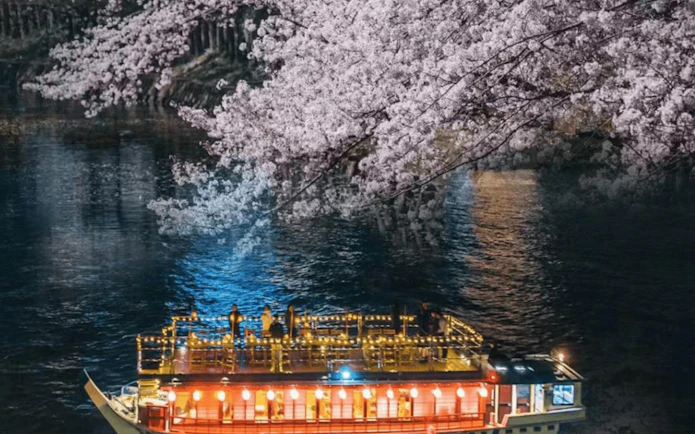
Slide 1 of 10, Yakatabune boat on Sumida River under cherry blossoms, Tokyo dinner cruise.
Yakatabune boat on Sumida River under cherry blossoms, Tokyo dinner cruise.
1 hr 30 mins
1 more
  • Experience Japanese tradition aboard a traditional Yakatabune boat.
  • Enjoy a sukiyaki meal with unlimited soft drinks
  • Admire Tokyo skyline views from the open-air deck for memorable moments
  • Multilingual host ensures a smooth and comfortable experience
More details
  • Experience Japanese tradition aboard a traditional Yakatabune boat.
  • Enjoy a sukiyaki meal with unlimited soft drinks
  • Admire Tokyo skyline views from the open-air deck for memorable moments
  • Multilingual host ensures a smooth and comfortable experience
from
¥17,800

Overview of sightseeing cruises in Tokyo

Overview:

  • Cruise options: Shared dinner cruises, seasonal sakura routes, and cultural show-focused Sumida River loops.
  • Duration: Most cruises last 90 minutes to 2.5 hours, including meal and entertainment.
  • Day vs. sunset cruises: Day cruises emphasize river scenery; evening cruises focus on illuminated skyline views.
  • Type of commentary: Onboard announcements mainly in Japanese; limited English explanations on some cruises.
  • Boat style: Traditional tatami-mat cabins with low tables; some boats offer rooftop open-air decks.
  • Boarding hubs: Asakusa Sumida piers, Tsukishima piers, Hinode Pier, and Harumi Terminal.
  • Good to know: Tatami seating dominates; request chair seating if needed and use decks for clearer views.
  • Short on time? Choose a 90-minute Sumida or Tokyo Bay route with included meal.

What to expect on a Tokyo Yakatabune cruise

Board from a central pier

Board at a Sumida River or Tokyo Bay pier near metro stations. Remove your shoes, step into the tatami cabin, and settle at your low table as crews finalize departure.

Relax in a traditional cabin

Sail away from the dock while servers bring drinks and starters. Glide in a climate-controlled tatami room, stepping onto the open deck whenever you want uninterrupted, panoramic skyline views.

Spot Tokyo’s illuminated landmarks

Cruise past Tokyo Skytree, Tokyo Tower, Rainbow Bridge, and Odaiba. Explore the open deck to spot each landmark from different angles and capture clear photos without street-level crowds.

Listen and dine as you glide

Listen to shamisen performances or announcements while you enjoy multi-course hot pot, sushi, or sukiyaki with included drinks. Discover how traditional flavors pair with evolving views outside the cabin windows.

Enjoy a steady evening pace

Glide at a calm speed that lets you finish your meal without rush, move between cabin and deck, and pause for photos near key viewpoints before returning to the original pier.

Experience sunset into night

On late departures, board in fading daylight and watch Tokyo gradually light up. Explore the open deck during sunset, then relax inside as bridges, towers, and bayfront buildings become fully illuminated.

How views differ by time of day on a Tokyo Yakatabune cruise

Afternoon cruises: Daylight on Sumida River and bay

  • View quality & lighting: Direct daylight reveals detail on Tokyo Skytree, riverside apartments, and bridges. Colors read clearly on Odaiba’s Fuji TV building and waterfront malls. Water can show some glare, but haze is usually low, so distant bay structures remain visible.
  • Atmosphere & crowd levels: Mix of tour groups and families, with more traffic from commuter ferries and workboats. Deck space is shared but not packed outside peak holidays and cherry-blossom dates.
  • Best suited for: First-time visitors wanting clear landmark views, families with children, travelers who prefer daylight navigation.
  • Recommended time range: 1–4 PM.

Sunset cruises: Transition from city outlines to first lights

  • View quality & lighting: Low western sun silhouettes high-rises around Tokyo Bay while picking out Skytree’s structure and bridge cables. The water reflects orange and pink tones before fading to grey. Skytree, Tokyo Tower, and buildings around Odaiba begin turning on their illumination during the cruise.
  • Atmosphere & crowd levels: Popular with pairs and small groups; decks get busier near Odaiba and Rainbow Bridge. Noise is moderate, with more camera shutters and conversation as light changes.
  • Best suited for: Photographers chasing golden-hour contrast, travelers who want both daylight detail and early-night lighting in one sailing.
  • Recommended time range: 1–1.5 hours before sunset to just after dusk (around 4:30–7 PM seasonally).

Evening cruises: Fully illuminated skyline and bridges

  • View quality & lighting: Rainbow Bridge, Tokyo Tower, and Tokyo Skytree appear as bright focal points against a dark sky. Bridge undersides and highway loops form clear light bands, and Odaiba’s facades and Ferris wheel are strongly lit. Water becomes a dark surface carrying long reflections of neon and signage.
  • Atmosphere & crowd levels: These are the busiest departures, with full cabins, active conversation, shamisen shows, and more party or group bookings. Upper decks see steady rotation of guests taking photos under each lit bridge.
  • Best suited for: Night-owl photographers, skyline watchers, social groups, business outings, travelers mainly interested in Tokyo’s illuminated cityscape.
  • Recommended time range: After dark, typically 7–10 PM depending on season.

Compare all your Tokyo sightseeing cruise options

Ideal for visitors wanting the full Tokyo Bay night experience with traditional tatami seating, multi-course Japanese dinner, and all-you-can-drink sake and beer.

  • Duration: 2–2.5 hours
  • Route / sights covered: Tokyo Bay loop with Rainbow Bridge, Odaiba, Tokyo Tower views
  • Inclusions: Multi-course Japanese dinner, all-you-can drinks, tatami cabin
  • Seating and boat type: Traditional yakatabune boat with indoor tatami seating and small open deck
  • Guidance type: Basic staff announcements in Japanese, minimal structured commentary
  • Best suited for: First-time visitors, couples, food-focused travelers wanting classic experience
  • Add-ons/upgrades: Higher-grade menu options, Tokyo Tower entry, private group seating preference

Tokyo sightseeing cruise routes

Tokyo Bay skyline Yakatabune route

  • Route followed: Departs mainly from Hinode Pier, cruising Tokyo Bay toward Odaiba and circling under Rainbow Bridge before returning.
  • Sites covered: Rainbow Bridge, Tokyo Tower views, Odaiba waterfront, Fuji TV Building, Tokyo Bay skyline.
  • Duration: 2–2.5 hours.
  • Ideal for: Night-scenery lovers and couples wanting classic illuminated skyline views with dinner.

Sumida River & Skytree Yakatabune route

  • Route followed: Boards near Asakusa or Tsukishima, following the Sumida River past central bridges toward Tokyo Skytree.
  • Sites covered: Tokyo Skytree, Asakusa riverfront, Sumida River bridges, Asahi Beer Hall.
  • Duration: 2–2.5 hours.
  • Ideal for: First-time visitors keen on traditional neighborhoods, Skytree views, and combining the cruise with Senso-ji sightseeing.

Cherry blossom Sumida Yakatabune route (seasonal)

  • Route followed: Follows the Sumida River’s sakura-lined banks from Asakusa/Tsukishima, often looping slowly through the blossom zone.
  • Sites covered: Sumida Park cherry trees, Tokyo Skytree, Asakusa waterfront, illuminated bridges.
  • Duration: 90 minutes to 2 hours.
  • Ideal for: Spring travelers prioritizing hanami views and photographers wanting blossoms plus skyline.

Fireworks & Odaiba festival Yakatabune route (seasonal)

  • Route followed: Sails from Hinode or nearby piers into Tokyo Bay, positioning near Odaiba for festival fireworks before returning.
  • Sites covered: Odaiba waterfront, Rainbow Bridge, Tokyo Bay fireworks, Fuji TV Building silhouette.
  • Duration: 2–3 hours.
  • Ideal for: Summer visitors seeking premium fireworks views and groups wanting a festive night on the water.

Sights you'll see from the water

Tokyo Skytree

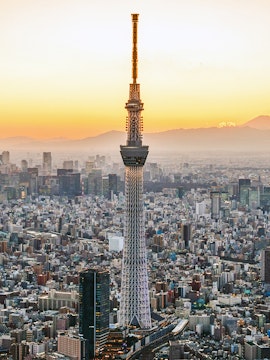
Sail along the Sumida River with Tokyo Skytree rising directly above the waterfront. Its illuminated lattice tower reflects in the water, and low bridges frame clear photo angles at night.

Tokyo Tower

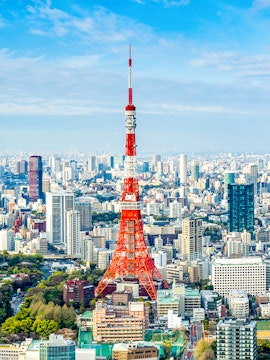
Glide through Tokyo Bay while spotting Tokyo Tower’s orange-and-white silhouette inland. From the deck, you see it aligned with city high-rises, creating a classic skyline backdrop after dark.

Rainbow Bridge

Pass directly beneath Rainbow Bridge’s long suspension span as its colored lights trace the cables. The underside view and framed city skyline on both sides make a distinctive photo sequence.

Odaiba & Fuji TV Building

Cruise around Odaiba’s waterfront, where the Fuji TV Building’s silver cube and spherical observation dome stand out against the bay. The cluster of modern towers and reflections emphasizes Tokyo’s futuristic side.

Sumida River bridges

Watch a series of low, arched and truss bridges slide overhead in quick succession. Their varying colors and lighting patterns create repeating frames for the riverside cityscape, especially striking on evening cruises.

Lantern-lit yakatabune boats (hidden gem)

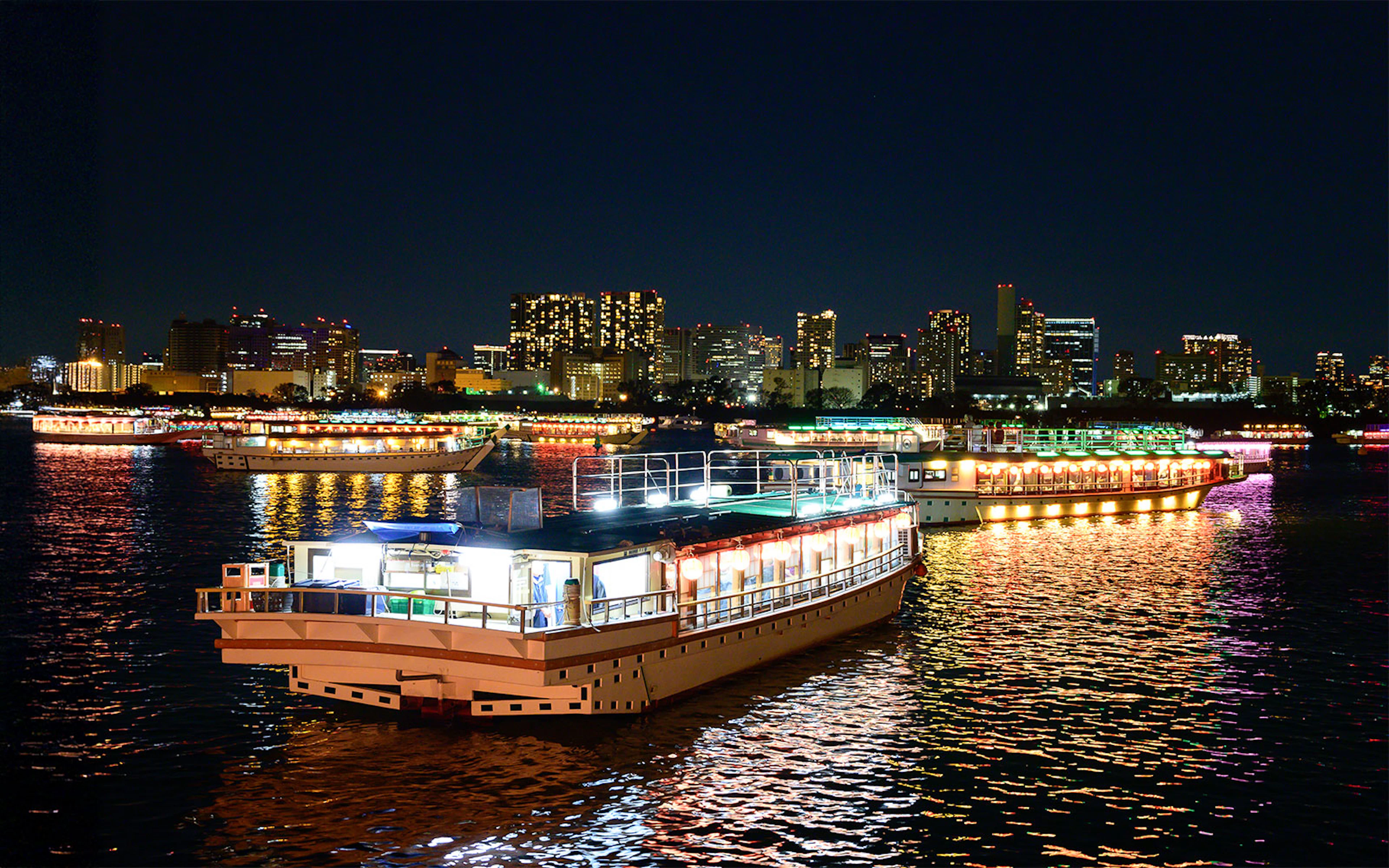
Spot other traditional yakatabune gliding past, their paper lanterns and low wooden cabins glowing just above the waterline. Seeing these boats from your own deck highlights the historic character of Tokyo’s waterways.

Your sightseeing cruise boarding point explained

Address: 1-1 Hanakawado, Taito City, Tokyo 111-0033, Japan (Sumida River pier by Azuma Bridge) | Find on map

Getting there:

  • By metro: Tokyo Metro Ginza Line to Asakusa Station (Exit 4), 5-minute walk towards Azuma Bridge.
  • By subway: Toei Asakusa Line to Asakusa Station (A5 exit), 6-minute walk to riverside piers.
  • By bus: Toei bus stop “Asakusa Kaminarimon” → 7-minute walk along Kaminarimon-dori to the river.
  • By taxi/car: Ask for “Asakusa Sumida-gawa pier (near Azuma-bashi).” Paid parking lots around Senso-ji and along the riverfront, 5–10-minute walk.

Famous for / Nearby:
Classic Sumida River setting beside Azuma Bridge with direct views of Tokyo Skytree and the Asahi Beer Hall “golden flame.” Senso-ji Temple and Nakamise shopping street are 8–10 minutes on foot, ideal to explore before or after your Yakatabune cruise in a very walkable, atmospheric old-town area.

Dining on board

On the standard sightseeing-focused Yakatabune cruise on this page, your ticket includes a set selection of Japanese dishes plus alcoholic and soft drinks, served alongside the onboard show, rather than simple snacks or drinks only. Other Yakatabune listings here are full dinner cruises with multi-course hot pot or sushi menus and beer, sake, and soft drinks included.

Plan your sightseeing cruise in Tokyo (Yakatabune)

Cruise timings:

  • Shared dinner cruises: 6 PM–9 PM (departures around 6 PM–7 PM, once nightly)
  • Seasonal sakura/fireworks routes: fixed slots, usually 5 PM–8:30 PM

Best time of day to go:
Evening cruises offer illuminated bridges, skyline views, and cooler temperatures. Daytime sakura cruises highlight cherry blossoms and clearer city views.

Best season/month:
March–April (cherry blossoms) and October–November (mild evenings, autumn colors) are ideal. July–August has lively fireworks nights but humid heat and higher demand.

Frequently asked questions about sightseeing cruises in Tokyo (Yakatabune cruises)

  • Most Yakatabune-based sightseeing cruises, including show-and-drinks options, run about 90 minutes to 2.5 hours from boarding to return. This allows time for views of Tokyo Skytree, Rainbow Bridge, and Odaiba, plus onboard entertainment and drinks. Check your specific cruise description for its exact duration.

  • Sightseeing-focused Yakatabune cruises usually include the boat ride, reserved tatami seating, a traditional Japanese show (such as shamisen performance), and a drink package (often beer, sake, and soft drinks). Some variants also include light meals or snacks. Read your chosen product’s “What’s included” list to confirm details.

  • Not all Yakatabune options are full dinner cruises. Some sightseeing variants focus on the route and cultural show, paired with drinks and simpler food (such as sushi sets, tea and sweets, or snacks). Others are full hot-pot or sukiyaki dinners. Choose based on how important a full meal is for you.

  • Yes, advance booking is strongly recommended, especially for cherry blossom, fireworks, and weekend evenings. Boats have limited capacity and popular time slots sell out quickly. Same-day spots may be available off-peak, but are not guaranteed. Booking a few days ahead helps you secure your preferred date and time.

  • Many operators allow changes or cancellations up to a set deadline before departure; after that, bookings are often non-refundable due to meal preparation and boat allocation. Policies vary by cruise and date, so always check the “Cancellation policy” section on your specific product page before confirming.

  • Yakatabune cruises usually operate in light rain, as the main cabin is covered and climate-controlled. Severe storms, high winds, or unsafe river conditions may cause cancellations or route changes. In those cases, operators generally offer a date change or refund according to their weather policy. Check your confirmation email for specifics.

  • Piers are typically near major stations like Asakusa, Tsukishima, or Hinode. Most are 5–10 minutes’ walk from the closest subway or JR stop. Exact pier names and maps appear in your voucher. Plan to arrive 15–20 minutes before departure to check in, remove shoes, and settle onboard.

  • Many cruises welcome children, but infants under 3 are often not allowed for safety and comfort reasons. The 90-minute to 2-hour length is usually fine for kids 5+ if they can sit at a low tatami table. Supervision near railings and on stairs is essential. Check age restrictions before booking.

  • Accessibility varies by boat. Main cabins often have low steps, narrow passages, and tatami seating, which can be challenging for some guests. Upper observation decks usually require stairs. If you use a wheelchair or have mobility concerns, contact the operator in advance to confirm suitability and possible assistance.

  • Compact, foldable strollers are usually allowed but must be folded and stored out of walkways once onboard. Large suitcases and bulky luggage are generally discouraged because of limited space and safety. It’s best to leave big bags at your accommodation or in a station locker before heading to the pier.

  • Crew and performers are primarily Japanese-speaking, and detailed live commentary is often limited in English. However, staff can usually help with basic instructions. These cruises focus more on views, food, and cultural performance than on guided narration. If you need in-depth explanations, look for products mentioning an English guide.

  • Dress is casual and comfortable. You’ll usually remove your shoes before entering the tatami cabin, so wear socks in good condition. Bring a light layer, as it can be cooler on the water, especially on the open deck. Avoid very tight clothing if you’re not used to floor seating.

  • Photography is welcome for personal use. The open upper deck is best for clear shots of Tokyo Skytree, Rainbow Bridge, and Odaiba. Move outside when the crew announces major sights or when passing under bridges. Tripods can obstruct walkways and may not be allowed, so plan to shoot handheld.

Get the Headout app, save up to 80%

Enjoy exclusive deals, offline access to your tickets & live booking updates.

Trusted by over 57 million guests worldwide

100% booking protection

You are fully protected end-to-end. If anything is off, we'll fix it or refund you.

Know more

Book with flexibility

Book stress-free with free cancellation and pay-later options on most experiences.

24/7 trip support

We're always a tap away - before, during and after your trip, in all languages.

Verified reviews from real travellers. Trusted by guests worldwide.