








Headout logo. Link to home.

Help

Sell on Headout

Cabo San Lucas Whale Watching Tours

Cabo San Lucas whale watching tours run December to April in the Sea of Cortez and Baja Pacific, where gray whales migrate south and humpbacks feed near the Arch. Find catamaran tours, small-boat options, and sunset whale watching formats here.
Why head out with Headout

Whale watching in Cabo San Lucas at a glance

  • Season: Mid-December to mid-April; strongest humpback activity typically January through March
  • Duration: 2 to 3 hours on the water; allow 3–4 hours door-to-door
  • What you'll see: Humpback and gray whales; dolphins and sea lions occasionally encountered en route
  • Vessel options: Large catamarans, open-deck cruisers, small pangas, high-speed zodiacs
  • Thermal gear: Warm layers recommended; waterproof jackets sometimes provided on small-boat tours
  • Guide: Bilingual naturalist-style commentary; some tours use marine biologists and hydrophones
  • Departure point: Mainly Cabo San Lucas Marina; some gray whale sanctuary tours depart further afield
  • Best for: Winter visitors, families, photographers, wildlife enthusiasts, cruise passengers on limited schedules

Which Cabo San Lucas whale watching cruise is right for you?

Your real choice is between a focused small-group whale tour, a longer full-day sanctuary trip, and a private charter that trades shared excitement for flexibility and space.

Cabo San Lucas Small-Group Whale Watching

A classic half-day whale safari that maximises time on the water while keeping groups small enough for everyone to have rail space and ask questions. You’ll depart directly from Cabo San Lucas, pass the Arch, then head where recent sightings have been strongest, with your guide explaining behaviours as whales surface, breach, or tail-slap around the vessel. Choose this if you want an efficient, education-focused encounter without giving up basic comfort.

  • Departure point: Cabo San Lucas Marina; central meeting point, hotel transfers often optional
  • Vessel: Small open motor vessel with partial shade; close-to-water viewing rails
  • Duration: Around 2.5–3 hours on water; ~3–3.5 hours total outing
  • Group size / privacy: Typically 10–15 guests; shared small-group public departure
  • Guide format: Bilingual naturalist guide with live whale behaviour commentary
  • Pace / comfort: Moderate; some motion and spray, but less bumpy than high-speed zodiacs
  • Includes: Lifejacket, expert commentary, basic refreshments; hotel pickup on some departures

Gray Whale Sanctuary Full-Day Tour with Transfers

This option extends beyond the immediate Cabo waters to a protected gray whale sanctuary, giving you a full-day outing that combines road transfers with an in-depth on-water session where gray whales congregate in calm, shallow lagoons. Expect a quieter, more immersive feel once on site, with a strong focus on conservation and behaviour. Pick this if you’re happy to trade a longer day of travel for concentrated time in a renowned sanctuary area.

  • Departure point: Hotel pickup in Los Cabos area; road transfer to gray whale sanctuary
  • Vessel: Small local panga-style vessel suited to shallow, protected lagoon waters
  • Duration: Full day, typically 8–10 hours including roundtrip ground transportation
  • Group size / privacy: Small shared groups; usually 8–12 guests per vessel segment
  • Guide format: Bilingual guide throughout transfers plus local boat captain commentary
  • Pace / comfort: Generally relaxed on the lagoon; long, seated minibus transfers both ways
  • Includes: Roundtrip transfers, sanctuary boat segment, guided commentary, lunch or snacks

Private Cabo Whale Watching Charter

A fully private vessel reserved just for your party, allowing you to decide how long to linger with particular whales, when to move on, and whether to mix in extra coastal sightseeing near the Arch or quieter coves. With only your group on board, there’s no competition for rail space or photography angles, and the crew can tailor the outing to mobility needs or special occasions. Choose this when privacy, flexibility, and comfort outweigh the higher per-boat cost.

  • Departure point: Cabo San Lucas Marina; custom meeting arrangements, optional hotel transfers
  • Vessel: Private motor yacht or panga; cushioned seating, shade; some with indoor cabin
  • Duration: Commonly 3–4 hours on water; extended charters available by arrangement
  • Group size / privacy: Your group only; typical capacity 2–10 guests depending on vessel
  • Guide format: Captain plus crew; dedicated naturalist guide on request for deeper insight
  • Pace / comfort: Flexible and comfortable; itinerary adjusted to group needs and sea conditions
  • Includes: Exclusive vessel, crew, soft drinks; some charters add snacks or light lunch

Whale sightings & season in Cabo San Lucas

Best time to go: The main Cabo whale season runs from mid-December to mid-April, when migrating humpback and gray whales move through the warm waters off Land’s End. January to March is the clear peak, with the highest whale numbers and most consistent activity. Early December and April are shoulder weeks: tours still run and encounters are fairly likely, but whale numbers and surface action taper off. Outside this window, dedicated whale tours generally do not operate.

What you’re likely to see: Humpback whales are the headline species and are common to reliable from January through March. Gray whales are regular but less numerous than humpbacks, so count them as common rather than guaranteed. Dolphins and sea lions near the Cabo San Lucas Arch are frequent supporting sightings in season. Other baleen whales such as fin or blue whales are occasional to rare bonuses, not expectations. Many reputable operators offer a free re-ride if no whales are seen on your trip. Sightings are never guaranteed, but operators are good at finding them in season.

Responsible whale watching: A must-do

Whale watching from Cabo San Lucas operates under Mexico’s NOM-131-SEMARNAT-2010 whale-watching regulations, which these tours follow.

  • Low-impact vessels: Operators use modern outboard pangas and larger catamarans, reducing noise and fuel use around whales.
  • Regulated approach distance: Captains respect Mexican minimum distances (around 60 meters for humpbacks) and slow or idle when near whales.
  • No pursuit policy: If whales dive, change direction, or show avoidance, boats hold position or leave the area.
  • Controlled congregation: Licensed skippers coordinate by radio so only a limited number of boats remain with each whale group.

Los Cabos has followed regulated, permit-based whale watching for decades without major incident records.

What a whale watching day looks like in Cabo San Lucas

Check-in at the marina

Arrive at Cabo San Lucas Marina, check in at your operator’s kiosk, sign waivers, and get fitted with a lifejacket. The harbor feels busy but relaxed as fishing boats, catamarans, and zodiacs load up around you.

Cruise past the Arch

The boat eases out of the marina and past the Cabo San Lucas Arch and sea lion colony. Guides point out rock formations and beaches while everyone settles in, taking photos as the open Pacific and Sea of Cortez come into view.

The search phase

Engines hum steadily as the captain heads toward recent sighting areas, scanning for blows, splashes, and tail slaps. This unhurried stretch often lasts an hour or more; people move along the rail, eyes on the horizon, cameras ready.

When whales appear

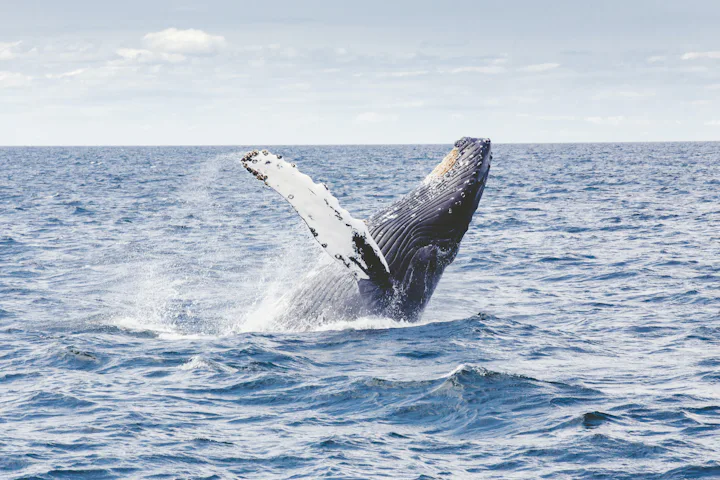
Once a spout or tail shows, speed drops and the boat idles at regulated distance while everyone rushes to one side. You might see repeated surfacings, tail flukes, or occasional breaches, with the guide calmly explaining behavior over wind and waves.

Warm up and reset

Between encounters, guests duck back under shade or into the cabin on larger boats, grab a drink, and review photos. On open zodiacs, people pull jackets tighter against spray, chat quietly, and watch for distant blows as the crew chooses the next move.

Ride back to harbour

After roughly 2–3 hours on the water, the captain points the bow back toward the bay. The coastline sharpens into resorts and beaches, the motion eases, and the day shifts from intense scanning to a slower glide before you step back onto the marina dock.

What to expect from the conditions

  • Climate/cold: Winter mornings on the water can feel much cooler than on land, so expect wind-chill and bring layers and a windbreaker.
  • Sea conditions: Swell and wind chop are common, especially on the Pacific side and in afternoons; choose a larger boat and consider motion-sickness meds.
  • Daylight/visibility: Tours run fully in daylight, but glare, spray, and haze can make spotting harder; polarized sunglasses help reduce eye strain.
  • Sightings reality: Peak-season odds are very high but never 100%; whales are wild and behavior varies by day despite operator effort.

A larger, shaded catamaran is usually easier if you’re sensitive to cold or motion.

What to expect from the conditions

What to expect from the conditions

  • Climate/cold: Winter mornings on the water can feel much cooler than on land, so bring a light jacket, layers, and sun protection.
  • Sea conditions: Swell and afternoon winds can make rides bumpy, especially on small zodiacs; choose a larger boat and consider motion sickness meds.
  • Daylight/visibility: Tours run fully in daylight, but glare and spray can make spotting harder; polarized sunglasses and hat help a lot.
  • Sightings reality: Peak-season odds are high but never 100%; wildlife is wild, so expect possible quieter days despite best efforts.

A larger, shaded boat is usually more comfortable if you’re cold- or motion-sensitive.

Your whale watching tour boarding points in Cabo San Lucas

Cabo San Lucas Marina (Central Docks)

Main whale-watching departure area on the waterfront, behind Puerto Paraiso/Luxury Avenue malls near the big marina sign.

Address: Cabo San Lucas Marina, Centro, 23450 Cabo San Lucas, B.C.S., Mexico – View on Google Maps

Getting there

  • By foot: 5–15 minute walk from most downtown Cabo San Lucas hotels toward the harbor.
  • By taxi: Ask for “Puerto Paraiso Marina”; drop at mall, then walk down to docks 5–10 minutes.
  • By hotel shuttle: Many tours include pickup to the marina area; follow your guide to the listed dock.
  • By public bus: Corridor buses stop near the marina/malls; walk downhill 5–10 minutes to waterfront.
  • By car: Drive to Puerto Paraiso parking; from there it’s a 5–8 minute walk to the boardwalk.

  • Arrival: Be there 20–30 minutes early for check-in, waivers, and lifejacket/safety briefing.
  • Famous for: Lively boardwalk with restaurants, fishing yachts, and views toward El Arco at Land’s End.

Puerto Los Cabos Marina (San José del Cabo)

Quieter marina on the San José side, east of downtown, used by a few small-group and gray whale tours.

Address: Puerto Los Cabos Marina, La Playita, 23403 San José del Cabo, B.C.S., Mexico – View on Google Maps

Getting there

  • By taxi: Around 10–15 minutes from central San José del Cabo; ask for “Puerto Los Cabos Marina”.
  • By hotel shuttle: Some tours include transfers from Corridor or Cabo San Lucas hotels direct to marina.
  • By car: Drive from Cabo San Lucas in about 35–45 minutes along Highway 1, follow marina signs.
  • By foot: 10–20 minute walk from La Playita and nearby San José marina-area accommodations.

  • Arrival: Arrive 20–30 minutes before departure to locate the correct pier and complete briefing.
  • Famous for: Calmer, less crowded feel than Cabo San Lucas Marina and easy access to San José’s historic center.

Plan your visit

  • Operating season: Mid-December to mid-April; most operators stop regular whale tours outside this window.
  • Daily departures: Typically 2–3 departures between ~8:00 and mid-afternoon; some run limited sunset slots in peak months.
  • Cruise duration: Around 2–3 hours on the water; allow 3–4 hours total including check-in and hotel transfers.
  • Time of day: Mornings usually mean calmer seas, cooler temperatures, and fewer party boats.
  • Season effects: Jan–Mar offers the highest whale activity and tour frequency; early Dec and April are quieter but still active.

Tips for the best whale watching trip in Cabo San Lucas

  • Choose morning if you’re motion‑sensitive: Cabo’s afternoon winds can make zodiacs and small boats choppy; an 8–9am departure usually feels smoother and quieter.
  • Pick boat size to match your style, not just price: Go small-group if you’re a “whale nerd” who wants biologist commentary; choose a big catamaran for shade, restrooms, and margaritas.
  • If you get seasick, sit low and central on large boats: Avoid the bow and upper deck; watching the horizon from midship in the shade noticeably helps in Cabo’s Pacific chop.
  • Use the Arch stop to fine‑tune your seat: When the boat pauses at the Cabo San Lucas Arch, notice sun and wind direction, then swap sides or decks before heading into open water.
  • Let the guide choose the side when whales appear: In Cabo, whales can surface anywhere around the boat; stay flexible and follow your guide’s pointing rather than guarding one rail.
  • For photos, prioritize burst mode over zoom: Humpbacks breach fast; on bouncy pangas and zodiacs you’ll get more keepers firing short bursts on a wide or mid‑zoom lens.
  • If you care about ethics, ask how they avoid “boat clusters”: Smaller operators or San José del Cabo departures often describe rotating turns and staying out of big flotillas around mothers and calves.
  • Cruise passengers should ignore cheap marina hawkers: With fixed all‑aboard times, book a tour aligned to your ship schedule instead of last‑minute pangas that may not track return deadlines.
  • Don’t stress about getting ‘the shot’ if your tour includes photos: Several Cabo biologist outfits share high‑quality images afterward, so you can watch breaches with your eyes instead of your screen.
  • Plan a second tour type if whales are your main reason for visiting: Many repeat visitors do one intimate zodiac trip and one relaxed catamaran cruise to experience Cabo’s whales from both extremes.

Frequently asked questions about whale watching tours in Cabo San Lucas

  • Most tours spend about 2–3 hours on the water. With check-in and any hotel transfers, you should budget roughly 3–4 hours door-to-door. Some combo or private-charter trips run a bit longer, so always confirm the stated duration when you book.

  • Standard tours include your boat ride, mandatory lifejacket, safety briefing, and live commentary (usually in English and Spanish). Larger boats often provide shade and restrooms; some add soft drinks or an open bar. Meals, hotel transfers, and pro photos are not universal—check your specific tour’s inclusions.

  • Main season runs mid‑December to mid‑April, with peak sightings and demand from January through March. In those peak months, morning and small‑group tours often sell out weeks in advance, especially around holidays, so booking early is strongly recommended.

  • In season, chances of seeing humpbacks or gray whales are very high, especially January–March, but never 100%. Some operators offer a “sighting guarantee,” usually meaning a free re‑ride if no whales appear, not a cash refund. Wildlife is unpredictable, so no tour can promise specific behaviors or close encounters.

  • If high winds, rough seas, or port authority restrictions make it unsafe, your tour may be cancelled or rescheduled. Reputable operators typically offer a new time slot or a refund according to their policy. Check the weather and cancellation terms before booking and keep your phone/email handy on the day.

  • Large boats and catamarans are more stable, shaded, and usually have restrooms—better for families, older travelers, and anyone prone to seasickness. Zodiacs and small rigid inflatables feel more adventurous and sit closer to the water, but are bumpier, more exposed, and usually lack toilets and shade.

  • Yes, if you choose the right boat. Larger vessels with seating, shade, and restrooms suit most kids and older adults. Small, fast zodiacs are often not recommended for toddlers, frail seniors, pregnant travelers, or anyone with back/neck issues. Always check age and health restrictions on the tour page.

  • Many motion‑sensitive travelers still enjoy whale watching by choosing a morning departure on a larger, more stable boat, taking seasickness medication 30–60 minutes beforehand, and staying on deck looking at the horizon. If you’re very prone to seasickness, avoid small zodiacs and windy afternoon trips.

  • Most tours leave from Cabo San Lucas Marina. If you’re staying nearby, you can walk or take a short taxi; resorts along the Corridor or in San José del Cabo often use hotel pickups or shuttles. Plan to arrive at the marina 20–30 minutes before departure to find the right dock and check in.

  • Dress in layers: a t‑shirt plus light fleece or windbreaker, and trousers or shorts you’re comfortable in when it’s breezy. Bring sunglasses, sunscreen, and a hat that won’t blow off. Closed‑toe shoes or secure sandals are safer on wet decks. Pack water, a small snack, and a dry bag for phones/cameras.

  • Humpback whales are the most commonly seen around Cabo, with gray whales also present in season. You may observe blows, tail flukes, breaching, or mothers with calves. Occasionally, other species like dolphins or rays appear, but these are bonuses rather than guaranteed sightings.

  • Accessibility is limited and varies by operator. The marina boardwalk is mostly flat, but ramps to floating docks can be steep, and boarding often involves stepping over gaps or using stairs. Many small boats and zodiacs are not wheelchair‑friendly. Contact the operator directly to confirm suitability before booking.

  • Small, high‑speed boats almost always advise against participation for pregnant travelers and anyone with serious back or neck issues because of bumps and jolts. Larger, slower boats may be acceptable with your doctor’s approval. Always read the health restrictions and, if in doubt, choose the most stable vessel.

  • No. Swimming or snorkeling with whales is not allowed under Mexican regulations, and ethical operators will not permit it. Boats must keep regulated distances and observe whales from the surface only. If you want to snorkel, book a separate reef or bay trip that doesn’t involve approaching whales in the water.

How Headout makes choosing experiences effortless

We curate the best ways to experience

We research and organise all unique experiences - from tickets to tours to special combos - so you get all the choices without the clutter.

We partner with the best

Every supplier is vetted for quality, reliability, and value so you only get top rated experiences. No surprises, no disappointments.

All the best options, in one place

Each experience is thoughtfully organised to give you maximum availability, great value and an easy way to choose.

Book with complete peace of mind

Free cancellations, Flexible payments, and 24/7 support - thoughtfully designed for flexibility, assurance, and total peace of mind.

1/4

Slide 1 of 4

We've served 52 million+ guests and we are here for you

52 million+

Happy customers across 10,000+ experiences

In the media

Featured and recommended by the best brands

24 x 7 help center

Have a question? Live chat with local experts anywhere, anytime